











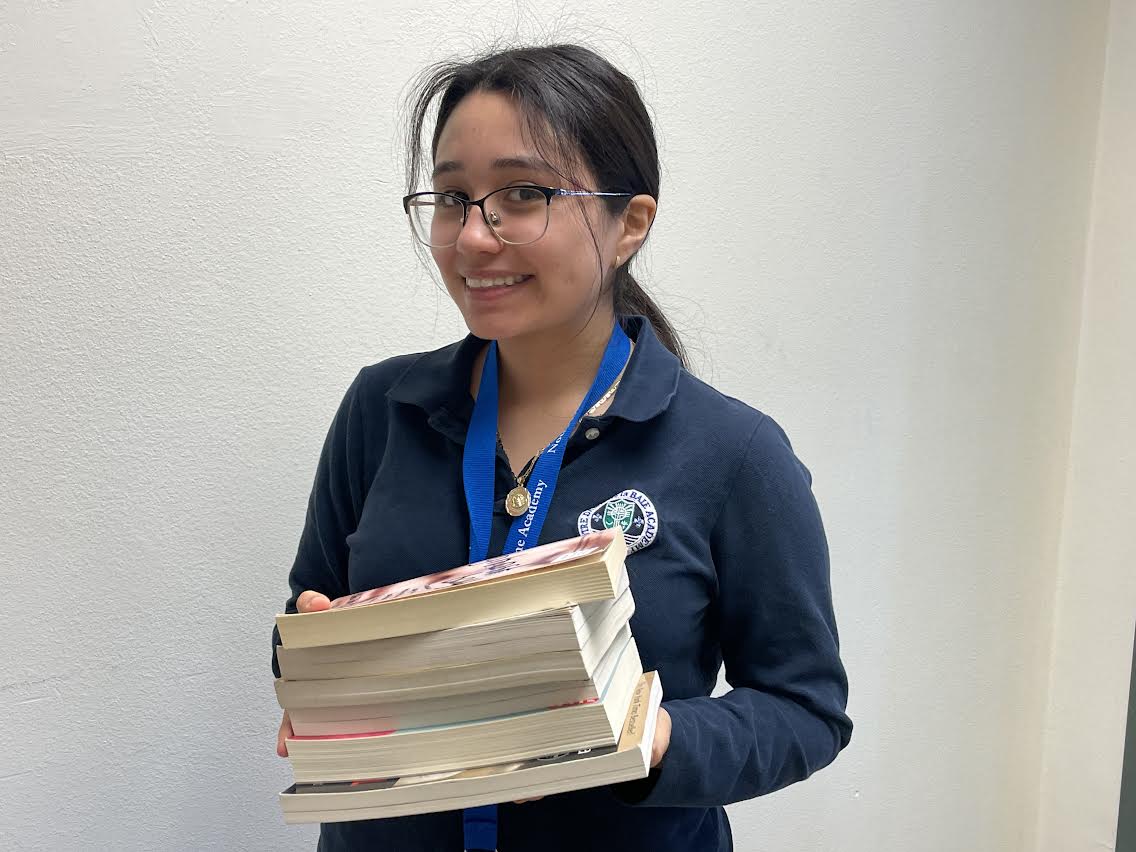
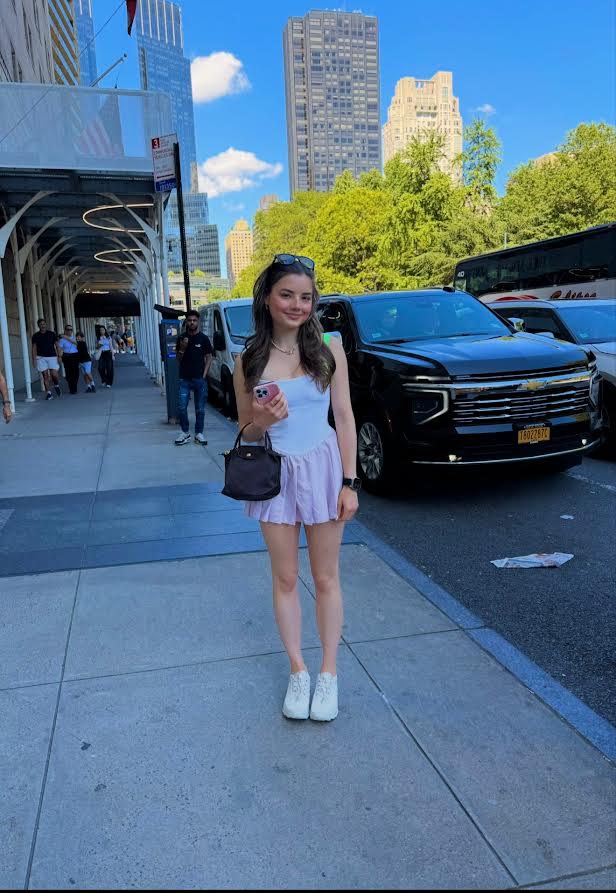
Three Notre Dame Academy alumni visited Mrs. Brown’s IB Senior English class to share their honest insights about adjusting to college life.
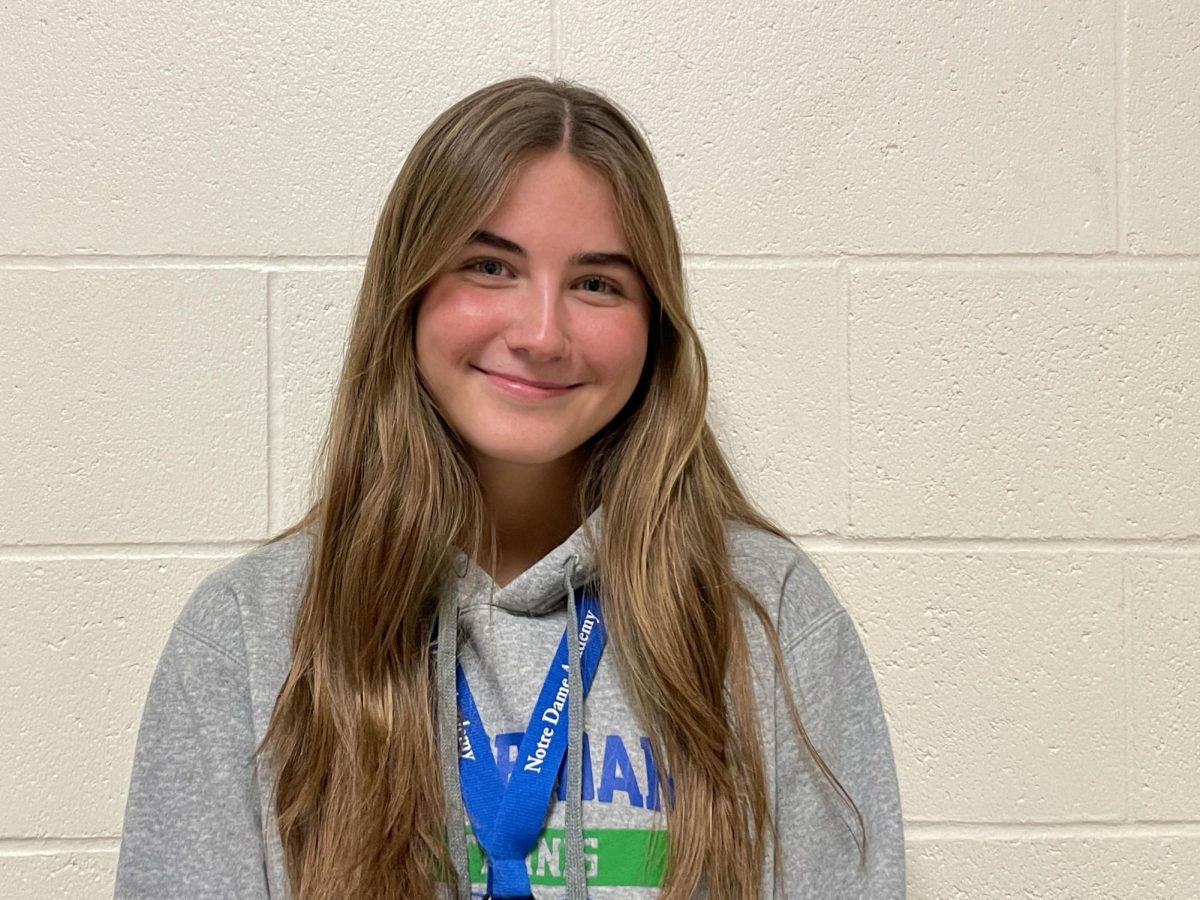
Lauren Conway, Frannie Wied and Maame Asiamah, each a former full IB Diploma student, reflected on their experiences with homesickness, academics and discovering what truly suits them.
Conway began her college journey at Boston College as a freshman and studied English as her major.
Initially drawn to the idea of a small school with a closed campus, Conway quickly realized it was not the right fit.
“I thought I wanted a small school with a closed campus, but when I got there, it wasn’t for me,” she said.
She later transferred to the University of Madison- Wisconsin, a large school with an open campus.
“Madison is the complete opposite of Boston, but I absolutely loved it,” she said.
Conway noted that Madison felt more manageable because it was closer to home, making visits from family easier.
Frannie Weid, currently attending Columbia University, described her first semester as overwhelming.
“It was my first time living in a big city, and I was super homesick,” she said.
Weid admitted she was convinced she hated it at first, but her parents encouraged her to stay.
Over time, she found a routine and built a support system.
“It gets easier over time. Staying busy and getting involved helps,” she said.
Weid currently writes for her school’s paper, participates in clubs and is rushing a sorority this upcoming semester.
Maame Asiamah, a psychology major at Loyola University of Chicago on the pre-med track, said she expected homesickness to hit hard.
“I was a mess before leaving and would cry over the simplest things,” she shared.
Surprisingly, she felt fine after the first week of school.
Asiamah credited Welcome Week and staying active for easing the transition.
“Don’t stay in your dorm all day. You need to push yourself to get out,” she said.
She added that homesickness returned around Thanksgiving, but going home and coming back helped her reset.
All three alumni emphasized the importance of saying yes to opportunities.
“Keep busy and try to say ‘yes’ to every activity. It helps you meet new people, and you’ll end up liking it,” Conway said.
She also shared that although she had a random roommate in Madison, they became close friends and remained in touch even after no longer living together.
Academically, the transition from IB to college came with challenges and surprises.
Weid noted that having fewer classes and more independent time was a major adjustment.
“You really only have a midterm and a final,” she said. “I struggled to adjust, so I filled my time with clubs.”
Asiamah, who takes 18 credits due to her pre-med requirements, said the workload felt similar to IB but structured differently.
“Everything piles together. Having chemistry and biology back to back was a major challenge,” she said.
Conway pointed out that grading scales varied widely across college courses.
“In some classes a 90 was an A but in others a 93 was an A,” she said.
Despite this, she found college easier than high school because of the abundance of resources.
“There are learning centers, office hours, and so many ways to get the help you need,” she said.
The alums also discussed IB credit and how it varies by institution.
Conway received more IB credit at Madison than at Boston College, allowing her to skip certain requirements and focus on preferred subjects.
Asiamah noted that Loyola only accepts higher-level IB courses with scores of 6 or 7.
“Check on your school’s IB credit policy before applying,” she advised.
When it came to choosing majors all three students experienced changes.
Conway entered college as an English major but shifted her focus to psychology after considering career opportunities.
Asiamah said she once considered law but realized after an internship that office work was not for her.
Wied initially planned to major in economics or fianced but switched to political science after disliking her introductory courses.
Their shared message to current students is that it is normal to feel unsure and growth takes time.
Through involvement, flexibility and self-reflection, each of the three former Tritons found her place.

